If you are a student looking for points to use in supporting the motion “Democracy is the best form of government”, you are at the right website and reading the right guide.
In the study of government and civic education, one question remains at the centre of every classroom discussion: Which system of government is truly the best? While history has seen kings, dictators, and oligarchs, the democratic model has emerged as the global standard for progress.
The motion before us is clear, and the evidence is overwhelming. While no human system is without its flaws, the democratic model remains the most resilient, just, and humane way to organise a society.
I have made some points to support the motion (Yes, Democracy is the Best Form of Government).
Read Also: Debate: Reading Books is Better Than Watching Movies (8 Points)
Points: Why Democracy is the Best Form of Government
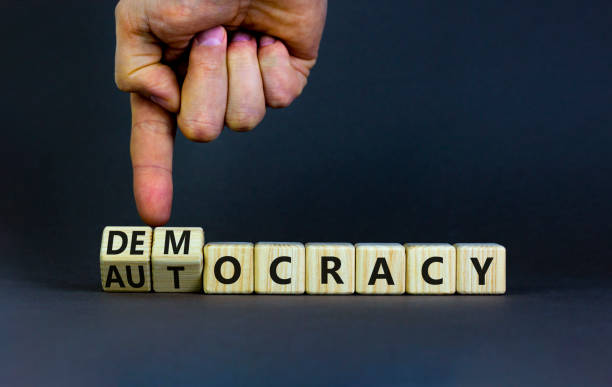
Below are ten points why democracy is the best form of government
1. Protection of Fundamental Human Rights
Democracy is the best form of government because it provides a robust shield for individual liberties that are often trampled in other systems. In a democracy, the government is not the source of rights but their protector. By enshrining freedom of speech, assembly, and religion into the constitutional fabric, it ensures that every individual can live without the shadow of state-sponsored fear.
2. Accountability and the Power of the Ballot
Democracy is the best form of government as it creates a direct line of accountability between the rulers and the ruled. In autocracies, leaders are beholden only to a small circle of elites or military generals. In a democracy, every few years, the citizens conduct a performance review.
If the government has failed to manage the economy, ignored the needs of the marginalised, or succumbed to corruption, the people possess the ultimate peaceful weapon: the vote. This constant threat of removal from office forces politicians to remain responsive to public opinion. It ensures that the government serves the national interest rather than the personal interests of a ruling family or a single party.
3. Separation of Powers and the Rule of Law
Democracy is the best form of government because it inherently understands that absolute power corrupts absolutely. By dividing authority into executive, legislative, and judicial branches, democracy creates a system of checks and balances that prevents any one person from becoming a tyrant.
This institutional design ensures that even the most powerful leader is subject to the rule of law. When a court can overrule an executive order or a parliament can refuse to fund a president’s vanity project, the system is working.
This structure protects the nation from the erratic whims of a single individual, providing a predictable and stable environment where justice is not a matter of who you know, but what the law says.
4. Conflict Resolution through Peaceful Dialogue
Democracy is the best form of government because it provides a civil framework for resolving the inevitable disagreements that arise in any complex society. In non-democratic regimes, political disputes often escalate into violence, coups, or civil wars because there is no legitimate way to challenge the status quo.
Democracy, however, institutionalises safe conflict. We fight with words in parliament, with arguments in the media, and with ballots in the polling stations. This process acts as a societal pressure valve, allowing different groups to vent their frustrations and seek compromise without tearing the nation apart.
It turns potential enemies into political opponents, maintaining social stability even during times of intense polarisation.
5. Economic Prosperity and the Spirit of Innovation
Democracy is the best form of government as it fosters the intellectual and economic freedom necessary for modern prosperity. There is a reason why the world’s most advanced economies are almost exclusively democratic. Economic growth requires the rule of law, the protection of property rights, and, most importantly, the freedom to innovate.
When people are free to challenge established ideas without fear of state reprisal, they create new technologies, new businesses, and new wealth. An open society allows for the free flow of information, which is the lifeblood of a modern economy. By rewarding merit and creativity rather than political loyalty, democracy creates a dynamic environment that raises the standard of living for the entire population.

6. The Principle of Inclusivity and Equality
Democracy is the best form of government because it is built on the revolutionary premise that every person’s voice has equal value. The principle of one person, one vote is the ultimate equaliser, cutting through barriers of wealth, race, gender, and social status.
In a true democracy, the government must build a broad coalition to survive, which necessitates addressing the needs of diverse groups within the population. This inclusivity prevents the permanent disenfranchisement of minorities and encourages a sense of national belonging.
7. The Mechanism of Self-Correction
Democracy is the best form of government because it possesses the unique ability to admit and fix its own mistakes. Authoritarian regimes are often brittle; they cannot admit failure because their legitimacy rests on the myth of the infallible leader. This leads to doubling down on disastrous policies.
Democracies, by contrast, are flexible. Through a free press, investigative journalism, and public protest, the system’s flaws are brought to light. Leaders can be changed, laws can be amended, and constitutional reforms can be passed. Democracy is a self-healing system that evolves with the times, allowing it to survive crises that would cause a rigid autocracy to shatter.
8. Promotion of Human Agency and Dignity
Democracy is the best form of government as it transforms people from subjects into citizens. In an autocracy, the individual is a mere tool of the state, expected to obey without question. In a democracy, the individual is a stakeholder in the country’s future. This sense of agency, the knowledge that your opinion matters and your actions can influence the direction of your nation, is vital for human psychological wellbeing.
It encourages civic responsibility, education, and community engagement. When people feel they have a seat at the table, they develop a deeper sense of pride and duty toward their society, fostering a culture of active participation rather than passive resignation.
9. Transparency and the Guardrails of Truth
Democracy is the best form of government because it operates in the light of day. Transparency is the natural enemy of corruption and incompetence. In a democratic system, the government is required to justify its actions to the public and the press. Access to information laws and a free media ensure that taxpayers know how their money is being spent and what policies are being pursued in their name.
While corruption can still exist in democracies, it is much harder to hide and much easier to prosecute than in closed systems where the state controls the narrative. This transparency builds trust between the people and their institutions, which is the social glue that holds a nation together.
10. The Democratic Peace and Global Stability
Democracy is the best form of government because it contributes to a more peaceful international order. Extensive political research has highlighted the Democratic Peace Theory, which observes that established democracies almost never go to war with one another.
Because democratic leaders must answer to a public that will bear the human and economic costs of war, they are more likely to seek diplomatic solutions and engage in international trade. A world of democracies is a world of partners rather than predators.
By promoting democratic values abroad, we are not just spreading a political system; we are building a global framework of stability and cooperation that benefits all of humanity.
Conclusion
We must acknowledge that democracy is often loud, slow, and frustratingly complex. It does not offer the efficient silence of a dictatorship. However, that noise is the sound of freedom. It is the sound of a society working through its problems together rather than having solutions imposed from above.
As we have seen through these ten points, democracy is the only system that respects human rights, ensures accountability, fosters economic genius, and provides a peaceful path for change. It is not a finished product, but a constant process of improvement.
It is the only form of government that trusts the people with their own destiny. For these reasons, and for the sake of a freer, more prosperous future, the motion must stand: democracy is, without question, the best form of government.
Note: This content is solely for debate purposes and not to discredit non democratic governance structures.