If you are a student looking for points to use while in support of the motion “Violent Video Games Should Be Banned”, you are at the right website and reading the right guide.
In a world where technology evolves faster than our ability to regulate its psychological impact, the debate over violent video games has moved beyond simple entertainment.
I have made some points to support why a ban on violent games is a necessary step to take to protect the well-being of our youth and the safety of our community.
Read Also: Debate: Mobile Phones Should Not Be Banned in Schools (10 Points)
Points Why Violent Games Should Be Banned
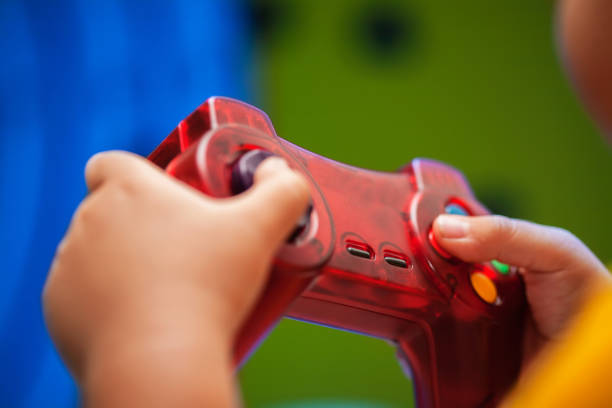
Here are 10 points that prove why a ban on violent games is not just a preference, but a social necessity.
1. The Numbing Effect on Human Empathy
Violent games should be banned because they lead to profound emotional desensitisation. In a natural environment, humans are born with a natural disgust for blood and suffering. However, violent video games require players to repeat these acts thousands of times to achieve a goal.
Over time, the brain stops flagging violence as a negative event. When a player becomes numb to virtual suffering, that desensitisation bleeds into the real world, making them less likely to intervene in a crisis or feel compassion for victims of actual violence.
2. Priming for Real World Hostility
Violent games should be banned because they serve as a catalyst for increased aggression. According to the General Aggression Model, violent media primes the brain to access hostile thoughts more quickly.
When a student spends hours in a state of high physiological arousal, with their heart racing and adrenaline pumping while fighting enemies, they remain in a state of hypervigilance long after the console is turned off. This makes them more likely to interpret a minor accident, like being bumped in a hallway, as a deliberate act of aggression that requires a forceful response.
3. Disruption of Adolescent Brain Development
Violent games should be banned because of the negative neurological impact they have on the developing brain. Science tells us that the prefrontal cortex, which is the area responsible for logic, self-regulation, and impulse control, is the last part of the brain to mature.
High-intensity violent games overstimulate the emotion centre while essentially short-circuiting the prefrontal cortex. By allowing children to engage in these games, we are allowing their neurological wiring to prioritise reactive violence over thoughtful deliberation.
4. The Transition from Observer to Perpetrator
Violent games should be banned because they grant the player a dangerous level of agency in committing acts of harm. There is a massive psychological difference between watching a violent scene in a movie (passive) and being the one who clicks the mouse to execute it (active).
In a game, the violence does not happen unless the player makes it happen. This level of agency creates a personal connection to the violence, turning a story into a simulated experience that the brain stores as a personal memory of success.
5. The Narrowing of Conflict Resolution Skills
Violent games should be banned because they facilitate the normalisation of conflict as the primary solution to problems. In the majority of top-selling violent titles, the win condition is the total destruction of the opponent.
There is no button to negotiate, compromise, or empathise. By spending their most formative hours in these digital worlds, players undergo a normalisation process where they begin to view complex social problems through the narrow lens of combat and dominance.
6. The Mimicry of Violent Archetypes
Violent games should be banned because they align with the social learning theory, which suggests that humans learn how to act by imitating role models. In these games, the heroes are often characterised by their capacity for extreme violence, stoicism, and lack of remorse.
When young, impressionable players identify with these protagonists, they adopt their traits. This social learning erodes the moral nuance required in the real world, replacing it with a warrior identity that is ill-suited for a peaceful society.
7. The Erosion of Respect for Human Dignity
Violent games should be banned because they promote the dehumanisation of others. To make the act of virtual killing repetitive and fun, developers often depict enemies as nameless, faceless, or subhuman entities.
This teaches players to strip away the humanity of those who stand in their way. This habit of dehumanisation is a dangerous psychological tool that, when applied to real-life social or political groups, can foster prejudice and a lack of respect for human life.
8. The Cycle of Addictive Rewards
Violent games should be banned because their core mechanics rely on the reinforcement of destructive behaviour. Games use a cycle of action and reward to keep players engaged. In a violent game, the action is an attack, and the reward is a Level Up, a trophy, or a new weapon.
This uses the brain’s own dopamine system to provide positive reinforcement for the simulation of murder, effectively training the player to feel a sense of accomplishment through destruction.
9. The Loss of Helpful Behaviour
Violent games should be banned because they have been shown to cause a significant decline in prosocial behaviour. Research indicates that the competitive and hostile nature of these games fosters a survival of the fittest mentality.
This reduces a player’s inclination toward prosocial acts, such as helping a peer or collaborating on a nonviolent task. A society that prioritises violent entertainment risks raising a generation that values individual dominance over communal well-being.
10. The Blurring of Factual and Virtual Realities
Violent games should be banned because the increasing digital lifelikeness of modern technology leads to psychological dissociation. We are no longer looking at cartoonish pixels; we are looking at 4K renderings of human beings that bleed and react realistically.
For vulnerable individuals, this high level of lifelikeness makes it difficult to maintain a mental firewall between what is acceptable in a game and what is acceptable in reality, leading to a state of dissociation where real-life consequences no longer feel real.

Conclusion
Violent games should be banned because they exploit a player’s agency and provide positive reinforcement for acts of harm, leading to the normalisation of violence and the dehumanisation of others.
Violent games should be banned because, through social learning, they replace prosocial values with gladiatorial mindsets; life-like games make it easy for people to feel disconnected from the real world.
We are not here to ban play; we are here to ban the systematic training of aggression in our children. We must choose a future where human dignity is valued above digital dominance.
Note: It is important to acknowledge that some research suggests certain video games can play a part in reducing depression by providing a sense of achievement, social connection, or emotional release for some players.
This content is provided strictly for educational purposes to assist students in preparing for a formal debate and exploring different facets of a complex social issue.