In the hyper-connected landscape of 2026, the question of whether parents should have access to their children’s social media accounts has evolved from a matter of privacy to a fundamental issue of safety.
The reality is that the digital world is not a playground; it is a sophisticated ecosystem that requires adult navigation. Providing parents with access to their child’s social media is not about spying; it is about fulfilling a duty of care.
I have made some compelling points to support (Yes, parents should have access to their child’s social media) and why it is a necessary component of modern parenting.
Read Also: Debate: Online Learning is Effective than Traditional (10 Points)
Points Why Parents Should Have Access to Their Child’s Social Media
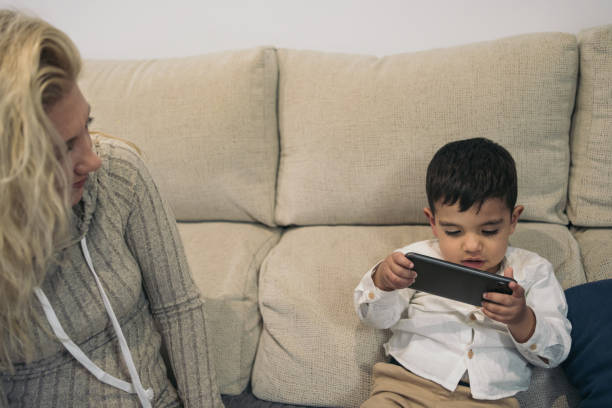
Below are 10 points why parental access to a child’s social media is essential.
1. Protection Against Sophisticated Online Predators
Parents should have access to their child’s social media because the internet provides a veil of anonymity that emboldens bad actors. In 2026, grooming techniques have become alarmingly sophisticated, often utilising AI to mimic the interests and speech patterns of teenagers.
By the time a child realises they are in danger, it is often too late. Parental access allows for the identification of red flag interactions such as encrypted messaging with strangers or requests for private photos, enabling intervention before a situation escalates into physical or emotional harm.
2. Mitigating the Algorithmic Mental Health Crisis
Parents should have access to their child’s social media because modern social media platforms are engineered to be addictive. With over 2,400 lawsuits currently filed against major tech companies for intentionally designing features that trigger dopamine-driven feedback loops, it is clear that minors are being targeted by persuasive design.
Parents should have access to their child’s social media because children lack the fully developed executive function to resist these infinite scrolls. Parental access allows caregivers to see exactly what content the algorithm is pushing, whether it be harmful diet culture, self. harm glorification, or radicalised ideologies, and step in to break the cycle.
3. Early Intervention in Cyberbullying
Parents should have access to their child’s social media because statistics show that nearly 60% of teenagers have experienced some form of cyberbullying. Unlike traditional bullying, digital harassment is relentless, following a child into their bedroom at all hours.
Parents should have access to their child’s social media because many children are too ashamed or scared to report these incidents. When parents have access to accounts, they can spot the signs of harassment early, document the evidence, and work with schools or law enforcement to protect their child’s emotional wellbeing.
4. Safeguarding the “Permanent” Digital Footprint
Parents should have access to their child’s social media because in 2026, a single impulsive post can derail a future career or university admission. Adolescents, whose prefrontal cortex is still developing, often struggle to grasp the long-term consequences of their digital actions.
Parental oversight acts as a safety net, allowing parents to guide children away from posting content that could haunt them years later. Access provides an opportunity for real-time coaching on what constitutes a responsible and respectable digital identity.
5. Biological Necessity: The Developing Brain
Parents should have access to their child’s social media because the adolescent brain is biologically wired to prioritise social rewards and peer approval over long-term risk assessment. Scientific research indicates that the brakes of the brain (the prefrontal cortex) do not catch up to the gas pedal (the limbic system) until the mid-20s.
Expecting a 14-year-old to self-regulate in an environment designed by world-class engineers to bypass their willpower is unrealistic. Parental access provides the external regulation that the adolescent brain cannot yet provide for itself.
6. Filtering Age-Inappropriate and AI-Generated Harms
Parents should have access to their child’s social media because the rise of generative AI has led to a flood of Deepfake content and realistic but harmful imagery that filters often miss.
Whether it is accidental exposure to explicit material or challenge videos that encourage dangerous physical behaviour, the digital world is rife with age-inappropriate content. Parents need access to see what their children are consuming to ensure it aligns with developmental stage and family values.
7. Teaching Digital Literacy through Mentorship
Parents having access to their child’s social media should not be viewed as a police state, but rather as a mentorship program. When a parent has access, they can sit down with their child and discuss specific posts, comments, or ads.
This active guidance helps children learn how to spot misinformation, understand privacy settings, and recognise when they are being manipulated by marketing. You cannot teach a child how to drive if you are never allowed in the car with them.
8. Preventing Financial Exploitation and Scams
Parents should have access to their child’s social media because social media in 2026 is deeply integrated with e-commerce and in-app currencies. Minors are frequently targeted by scams involving free gaming credits, fake influencer giveaways, or fraudulent AI-generated help requests.
Without parental oversight of messages and transactions, children can easily fall victim to financial exploitation, sometimes costing families thousands of dollars and compromising sensitive personal data.
9. Legal and Civic Responsibility
Parents should have access to their child’s social media because in many jurisdictions, parents are held legally and financially responsible for the actions of their minor children. If a child uses social media to engage in defamation, harassment, or the distribution of illegal content, the parents are often the ones facing the legal consequences.
Since the parent carries the liability, it is only logical and fair that they have the right to monitor the activity for which they are ultimately responsible.
10. Establishing a Foundation of Transparency
Parents should have access to their child’s social media because when access is established as a transparent rule from the beginning, it fosters a culture of accountability. It sends the message that we are in this together.
Knowing that a parent can see their activity often serves as a helpful internal voice for a child, encouraging them to think twice before engaging in risky behaviour. It moves the relationship from one of secrets to one of open, safety-oriented communication.

Conclusion
Parental access to their child’s social media is not about a lack of trust; it is about the presence of protection. In a world where digital threats are increasingly complex and invisible, parents must have the tools to guide, mentor, and safeguard their children.
By maintaining access, parents ensure that their child’s digital upbringing is defined by safety, education, and responsibility rather than secrecy and risk. It is important to note that this content is solely for debate purposes and to prove that parental access is good.