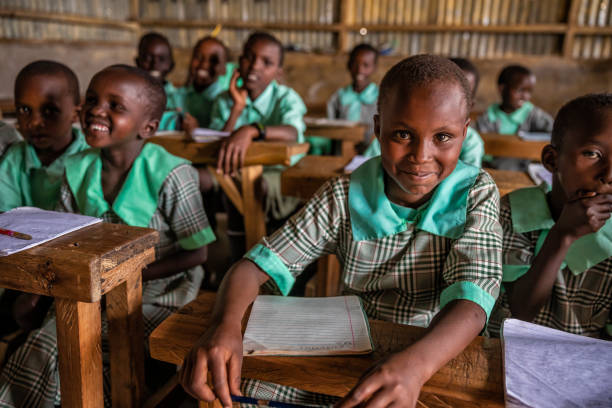
Kenya is a varied country with over 40 ethnic groups, each with unique histories, cultures, traditions and contributions to national development. Education has played an important role in shaping the progress of many communities in the country of Kenya.
Over the years, some tribes in Kenya have gained recognition for their strong emphasis on education and academic achievement.
In this article, I will highlight the list of the most educated tribes in Kenya. Therefore, there are many educated tribes in Kenya, but I’ll be giving just the top 10 most Educated.
Read Also: Top 10 Most Educated Tribes In Nigeria for 2026
Most Educated Tribes In Kenya 2026
1. Kikuyu
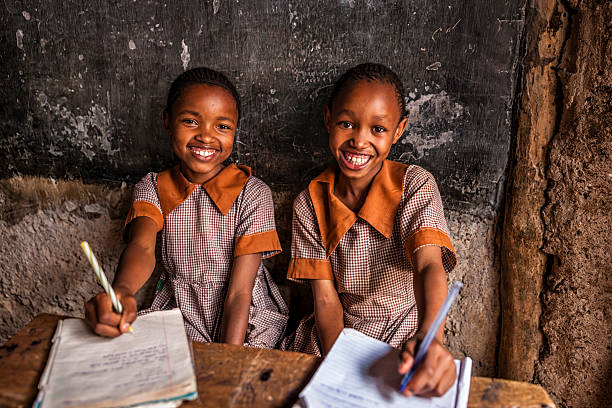
The Kikuyu tribe, people from this tribe are the most educated tribe in Kenya, with over 5600 Ph.D. This tribe is popular for knowing where money is, and this is why they have positioned themselves in all the competitive courses.
This has made it very hard for other tribes to excel in such areas. Kikuyu are the majority in law, business, journalism and communication professions. There is also a significant number in mathematics and medicine. The truth is that this community is highly aggressive, and no tribe has managed to challenge their superiority in all sectors.
Although they were a little community at first, they managed to increase their population in the late 20th century, and now they are the largest ethnic group in the country, with approximately 22% of the entire population.
2. Luhya
The second on my list is the Luhya tribe, also known as Baluhya, Abaluhya or Abaluyia, a Bantu tribe that lives in the fertile western region of Kenya.
The Luhya people have shown their smartness in education. They are involved in almost all sectors of the Kenyan economy. There are many Luhya who work as professional and skilled labourers throughout the country.
They are neighbours to multiple Nilotic tribes like the Kalenjin, Luo, Teso (Iteso) and Maasai. They are the second largest ethnic tribe after the Kikuyus and account for approximately 14% of the population in Kenya.
Though they are considered one tribe, this community has over 18 sub-tribes, with each speaking a varied dialect of the Luhya language.
3. Luo
The Luo come third, and to date, they have managed to showcase their brilliance when it comes to education by managing to secure some of the best professions.
Some people believe that the Luo have brilliant minds because of taking fish, one of their staple foods. You can find most of them in Kisumu and other fishing towns along Homabay beach and the surrounding environments.
The Luo community has traditionally produced countless scholars and other educated people, with some of them graduating from prestigious colleges around the globe, like Harvard.
Due to their love for education, Luo professionals also dominate nearly all the areas of the Kenyan economy, government, and business.
4. Maasai
The Maasai tribe, this tribe is known for being the most authentic tribe in Kenya. The Maasai, or Maa, have also made some achievements when it comes to education.
This tribe is popular because of its long-preserved culture. Despite civilisation, education and Western cultural influences, this ethnic group has managed to cling to its tradition and customs, making it the symbol of Kenyan culture.
Therefore, they speak Maa, a Nilotic language that originated from North Africa’s Nile region. So much effort has been put into this community, especially by outsiders, to stop humiliating traditions, like FGM.
5. Kalenjin
The Kalenjin is a Nilotic community that’s made up of 10 subgroups, with Kipsigis being the largest subgroup. The Kalenjin tribe is the fifth-largest ethnic community in Kenya.
Kalenjin have 8 culturally and linguistically related tribes: the Kipsigis, Nandi, Keiyo, Tugen, Pokot (also called Suk), Marakwet, Terik and Sabaot (this tribe lives in the Mt. Elgon region covering the Uganda/Kenya border).
Their present-day homeland is the Rift Valley and Kenya’s western highlands. The Kalenjin managed to create their tribal identity in the 1950s and also stood out as a community after one of their own became the second president of Kenya.
The second president ensured that there were as many schools as possible in the region at that time. There are many Kalenjin professors and PhD holders, and it is easy to find the most learned professor in Kenya from this tribe.
6. Kamba
This is another Bantu ethnic group, also called Akamba, which resides in the semi-arid Eastern Province. The Kamba are the sixth tribe in Kenya, making up 11% of Kenya’s total population. Their homeland stretches northeast to Embu and east from Nairobi.
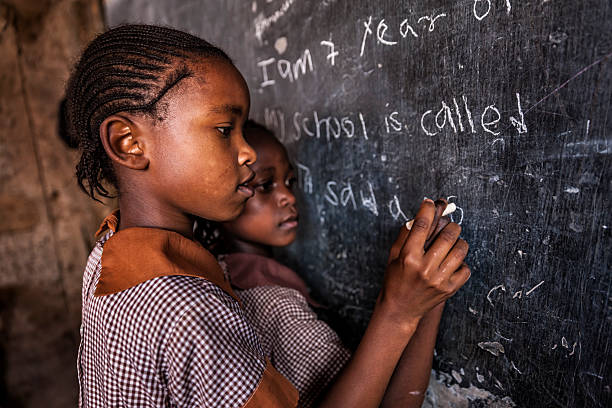
The Kamba are currently the sixth most educated tribe in Kenya. Even though they are one of the most populous tribes, this community also has many literate people.
During the pre-colonial period, the Kamba were involved in long-distance trade, and this led to their migration. Some of them settled on the Kenyan coast, creating the start of urban settlement. To date, they still stay in the coastal towns and have become part of the political, economic and cultural life of the Coast Province.
7. Meru
The Meru is another tribe that has also secured its spot in this list by offering multiple of the most learned professors in Kenya.
They are also a Bantu ethnic group. This community is divided into 7 sub-tribes, namely Imenti, Tigania, Igoji, Miutuni, Igemebe, Muthambi, and Mwimbi.
Their strong educational foundation was provided by the numerous Christian mission schools, most of which were started by Methodist, Presbyterian and Catholic churches that had settled in the area in the early years, making them one of the most influential tribes in the country.
8. Taita
The Taita people are Bantus who live in the Taita Hills, near the Tanzania border (in Kenya’s southwest).
This tribe consists of 3 separate sub-tribes: Wataveta, Wadawida, and Wasaghala.
Although the Taita people are traditional gemstone miners, the community has not thrived much in the education sector. Today, the Taita people have some of their own who serve in the government, and the literacy rates are rising.
9. Mijikenda
This community is found in the Kenyan coastal region. The name Mijikenda stands for nine sub-tribes, namely Duruma, Chonyi, Kauma, Rabai, Ribe, Jibana, Kambe, Digo, and Giriama.
Although this ethnic group hasn’t shone in the education sector as expected, they do have a minimal percentage of PhD holders. The overall literacy rates are gradually improving, but much more is desired.
10. The Kisii tribe
The Kisii tribe is a Bantu ethnic community that occupies the Kisii highlands in Nyanza, Kenya. Their home is sandwiched between the Luhya and Luo tribes.
Although they are famous for pottery, soapstone carvings and basketry, this community lives in a very fertile land that is often wet all year round, making it an agricultural area.
Due to this, the Kisii tribe has managed to get educated and has become one of the economically successful communities in Kenya.
Frequently Asked Questions FAQs
1. Which tribe has the most educated people in Kenya?
The most educated tribe in Kenya is often considered to be the Kikuyu. They have historically placed a strong emphasis on formal education, entrepreneurship, and leadership, and many prominent Kenyan leaders, businesspeople, and scholars come from the Kikuyu community.
2. What are the top 5 tribes in Kenya?
The Kikuyu, Luhya, Luo, Kalenjin, and Kamba are the five dominant ethnic groups of Kenya, but note that they are far from the only ones.
3. What is the most fearless tribe in Kenya?
The Maasai have always been special. Their bright red robes set them apart visually. Spear in hand, they are calm and courageous regardless of the danger.
The armed British troops who drove the Maasai from their lands in the early 20th century had great respect for these fearless tribesmen.
Conclusion
Therefore, education in Kenya is becoming more balanced day by day, with people from different tribes succeeding and excelling in schools, universities, and professional fields.
Education is not limited to any tribe in Kenya, as people from all communities have made great efforts to value learning and achieve academic success.
And what truly matters is equal opportunity, hard work, and access to quality education for everyone.